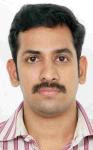
Writer Sujatha, a multi-faceted personality - a great writer, the man behind Electronic Voting Machines and a Linux enthusiast died on 27th Feb.
I am a great fan of Sujatha. Though I haven't read much of his novels, I like very much the way he
simplified and explained the complex stuff in various areas, right from Neurology to Computer science. He had always been curious about how things are working and explaining it to people such that everyone understands. He has made countless contributions in various fields.
May his heart rest in peace.
Saturday, March 1, 2008


Wednesday, February 20, 2008
Time to fork?
I was thinking about this for a while - whether to separate work-related blog from personal blog?
I think it's a good idea mainly because audience are different and I would like to submit the feeds of my work related to some well-known websites.
Soon the announcement will follow :)
I think it's a good idea mainly because audience are different and I would like to submit the feeds of my work related to some well-known websites.
Soon the announcement will follow :)
Catching up!
More than 50 days since my last blog. Was little busy, mostly personal stuff...
Need to get charged up and have to do a lot better..
- Moved into my new home, settling down slowly (I'm a proud owner now :)
- Some of close friends got married, was attending weddings/functions almost all weekends.
- It took a while to get Internet connection at home.
Sunday, December 16, 2007
FOSS.IN/2007 experience
FOSS.IN is one of the premier FOSS events that happens in Bangalore, India every year around November/December. I remember the days when I attended the first ever Linux Bangalore event LB/2001 (FOSS.IN then called Linux Bangalore). The event has grown by leaps and bounds; not only focusing specifically on Linux, but also on all other FOSS technologies. The venue this year was IISc, Bangalore during Dec 4 - Dec 8.
Along with the usual Main Conference, BOFs, Expos, two new additions to FOSS.IN/2007 are:
"HackCenter" is basically a large area provided with power, switches n/w, Internet, tables and chairs where people can get together and work on a FOSS project as a group.
Sponsors of the event include Sun, Google, Red Hat, IBM, HP, Citrix, Zimbra, ABB, Akamai, Trolltech, SpikeSource, Geodesic Information systems Media Partners (Dataquest and PCQuest) and others. My employer's event absence was heavily questioned and I was tired diplomatically answering those question.
The main conference started on 6th Dec with the inaugural talk by Atul Chitnis, the man behind the event, that was followed by Naba kumar's keynote on Anjuta DevStudio.
James Morris gave a talk which is aimed to demystify the Kernel development process and encourage contributors. Last year, we had Christoph Hellwig talking on Kernel development mostly covering the same aspects. Though the information was nothing new and was talked about by Greg KH in his "Kernel development HOWTO" or Randy Dunlap's "Kernel development: Getting started", his talk was filled with interesting self experiences.
The talk I most liked was by Rusty Russell on lguest, the hypervisor written using paravirt_ops. I tried to setup lguest on my Thinkpad during the event in the "HackCenter", I got stuck because of some scsi issues with 2.6.24-rc4 vanilla kernel. The next interesting talk was on Union Mount, VFS based Filesystem Namespace Unification by Bharata B Rao. After the talk we had an unplanned BOF on Union Mount since there was a lot interest.
Kamalesh Babulal gave a talk on Linux kernel testing, a nice talk covering almost all aspects of Linux kernel testing. He correctly pointed out the need for developer's contribution to test cases and the low test case coverages given the number of lines being added per release.
The project days this year covered mostly with the basic stuff. There were a few interesting talks. One among them was on "ZeroConf networking with Avahi" by Lennart Poettering.
Most of the sponsors had a stall including Sun, Google, Red Hat, Citrix, Zimbra, IBM, Akamai, Spikesource, ABB and others. Almost every stall happened to be a recruitment booth. Sun had few interesting demos on Open cluster, Grid computing, Glass fish, OpenDS and so on. IBM had a demo of System tap.
There is a global perspective that Indian software industry is a big consumer of FOSS projects and contributes very less, given its size and international presence. This is a sad truth. I should say FOSS.IN is a concious effort to change that perspective. It may a take a year or two or may be few years, but lam confident that the number of Indian FOSS contributors will surely grow.
Along with the usual Main Conference, BOFs, Expos, two new additions to FOSS.IN/2007 are:
- Project Days and
- HackCenter
"HackCenter" is basically a large area provided with power, switches n/w, Internet, tables and chairs where people can get together and work on a FOSS project as a group.
Sponsors of the event include Sun, Google, Red Hat, IBM, HP, Citrix, Zimbra, ABB, Akamai, Trolltech, SpikeSource, Geodesic Information systems Media Partners (Dataquest and PCQuest) and others. My employer's event absence was heavily questioned and I was tired diplomatically answering those question.
The main conference started on 6th Dec with the inaugural talk by Atul Chitnis, the man behind the event, that was followed by Naba kumar's keynote on Anjuta DevStudio.
James Morris gave a talk which is aimed to demystify the Kernel development process and encourage contributors. Last year, we had Christoph Hellwig talking on Kernel development mostly covering the same aspects. Though the information was nothing new and was talked about by Greg KH in his "Kernel development HOWTO" or Randy Dunlap's "Kernel development: Getting started", his talk was filled with interesting self experiences.
The talk I most liked was by Rusty Russell on lguest, the hypervisor written using paravirt_ops. I tried to setup lguest on my Thinkpad during the event in the "HackCenter", I got stuck because of some scsi issues with 2.6.24-rc4 vanilla kernel. The next interesting talk was on Union Mount, VFS based Filesystem Namespace Unification by Bharata B Rao. After the talk we had an unplanned BOF on Union Mount since there was a lot interest.
Kamalesh Babulal gave a talk on Linux kernel testing, a nice talk covering almost all aspects of Linux kernel testing. He correctly pointed out the need for developer's contribution to test cases and the low test case coverages given the number of lines being added per release.
The project days this year covered mostly with the basic stuff. There were a few interesting talks. One among them was on "ZeroConf networking with Avahi" by Lennart Poettering.
Most of the sponsors had a stall including Sun, Google, Red Hat, Citrix, Zimbra, IBM, Akamai, Spikesource, ABB and others. Almost every stall happened to be a recruitment booth. Sun had few interesting demos on Open cluster, Grid computing, Glass fish, OpenDS and so on. IBM had a demo of System tap.
There is a global perspective that Indian software industry is a big consumer of FOSS projects and contributes very less, given its size and international presence. This is a sad truth. I should say FOSS.IN is a concious effort to change that perspective. It may a take a year or two or may be few years, but lam confident that the number of Indian FOSS contributors will surely grow.
Friday, November 23, 2007
What's The "Fuzz" All About?
As part of my day's work, I was trying to adjust a 'fuzz'[2] when I tried to patch [1] manually. Since I have never encountered much of fuzz while patching earlier, I didn't think of a better way of adjusting fuzz than doing manually.
For e.g. while patching you might get a message like:
"Hunk #3 succeeded at 717 with fuzz 2 (offset 7 lines)."
This means that patch had to adjust the location of the change (in this example it needed to move 7 lines from where it expected to make the change to make it fit). The fuzz factor as we see in this example is 2. This factor determines how far from its original line a hunk is allowed to match. The default is two I suppose.
Manually fixing the fuzz is a pain if the patch results in multiple fuzzes. This seems a simpler way to me if you are using 'quilt'[3] to manage patches:
1. quilt new # the patch name can be different from the original patch
2. quilt add file1.c file2.c # files that are changed by this patch
3. patch -p1 < ../file.diff # Apply the original patch using patch command 4. quilt refresh # creates the new patch that is fuzz adjusted This can also be done manually by applying the original patch and recreating the patch without quilt as Jony pointed out. However, if you are working on a patchset it is difficult to manage without patch managing utilities like quilt.
----
NOTE: There seems to be a much simpler way using quilt for adjusting fuzz and handling rejects.
$quilt import
$quilt push
(a) If there are no rejects, quilt applies the changes and doing a
$quilt refresh
ensures that the patch is and fuzz adjusted and updated.
(b) If there are rejects, quilt will not apply the changes by default, you need to force quilt using
$quilt push -f'
to apply changes and it create file.c.rej files which gives details about the rejects.
Now look at the file.c.rej file and manually edit the file to reflect the changes.
$vim file.c.rej file.c
Once done with the changes, do
$quilt refresh
This ensures that the rejects are being handled and the new patch reflects the change. So simple, right?
----
This comes in handy when you need to create patches for multiple versions and you have multiple patches to manage.
Be warned that a 'fuzz' could indicate that the source has changed and the resulting file after patch adjusts may or may not be OK. Double check to be sure.
[1] - A patch is a file containing the delta of changes between two different versions of a source tree. Patches are created with the "diff" program and they are so common in *nix world.
[2] - Whenever patch utility applies a patch that it had to modify a bit to make it fit, it'll tell you about it by saying the patch applied with 'fuzz'. When patch encounters a change that it can't fix up with fuzz it rejects it outright and leaves a file with a .rej extension (a reject file)
[3] - quilt allows to manage a series of patches by keeping track of the changes each patch makes. Patches can be applied, un-applied, refreshed, etc.
For e.g. while patching you might get a message like:
"Hunk #3 succeeded at 717 with fuzz 2 (offset 7 lines)."
This means that patch had to adjust the location of the change (in this example it needed to move 7 lines from where it expected to make the change to make it fit). The fuzz factor as we see in this example is 2. This factor determines how far from its original line a hunk is allowed to match. The default is two I suppose.
Manually fixing the fuzz is a pain if the patch results in multiple fuzzes. This seems a simpler way to me if you are using 'quilt'[3] to manage patches:
1. quilt new
2. quilt add file1.c file2.c # files that are changed by this patch
3. patch -p1 < ../file.diff # Apply the original patch using patch command 4. quilt refresh # creates the new patch that is fuzz adjusted This can also be done manually by applying the original patch and recreating the patch without quilt as Jony pointed out. However, if you are working on a patchset it is difficult to manage without patch managing utilities like quilt.
----
$quilt import
$quilt push
(a) If there are no rejects, quilt applies the changes and doing a
$quilt refresh
ensures that the patch is and fuzz adjusted and updated.
$quilt push -f'
to apply changes and it create file.c.rej files which gives details about the rejects.
Now look at the file.c.rej file and manually edit the file to reflect the changes.
$vim file.c.rej file.c
Once done with the changes, do
$quilt refresh
This ensures that the rejects are being handled and the new patch reflects the change. So simple, right?
----
This comes in handy when you need to create patches for multiple versions and you have multiple patches to manage.
Be warned that a 'fuzz' could indicate that the source has changed and the resulting file after patch adjusts may or may not be OK. Double check to be sure.
[1] - A patch is a file containing the delta of changes between two different versions of a source tree. Patches are created with the "diff" program and they are so common in *nix world.
[2] - Whenever patch utility applies a patch that it had to modify a bit to make it fit, it'll tell you about it by saying the patch applied with 'fuzz'. When patch encounters a change that it can't fix up with fuzz it rejects it outright and leaves a file with a .rej extension (a reject file)
Thursday, November 1, 2007
Are you Right or Left brained?
I had thought about this subject a couple of times sometime ago. But, never did any research on this. Shankar's post - Right brain or left brain prompted me to do a little research on this subject. Going by this quiz it seems I use more of my Right brain.
Here is the result:
And this test too confirms this!
Here is the result:
| You Are 40% Left Brained, 60% Right Brained | |
 The left side of your brain controls verbal ability, attention to detail, and reasoning. Left brained people are good at communication and persuading others. If you're left brained, you are likely good at math and logic. Your left brain prefers dogs, reading, and quiet. The right side of your brain is all about creativity and flexibility. Daring and intuitive, right brained people see the world in their unique way. If you're right brained, you likely have a talent for creative writing and art. Your right brain prefers day dreaming, philosophy, and sports. |
And this test too confirms this!
Tuesday, October 30, 2007
Being Happier!
Becoming happier requires being Active,
Changing what we can change, Accepting what we cannot change,
Trying not to blame others or circumstances for our misfortunes,
Valuing what we have and developing a more positive attitude to our lives.
I don't know where I picked up this quote a few years ago. I like it very much and read it once in a while. Atleast, it has made me a little more active for sure ;-)
Changing what we can change, Accepting what we cannot change,
Trying not to blame others or circumstances for our misfortunes,
Valuing what we have and developing a more positive attitude to our lives.
I don't know where I picked up this quote a few years ago. I like it very much and read it once in a while. Atleast, it has made me a little more active for sure ;-)
Thursday, October 11, 2007
More Impressions!
Hmm.. I never thought it would take this long to write the sequel of the previous blog. I was tied up a bit. Thought of finishing this one before my memory fades..
The next morning we started from Prague to Spicak, 4hrs journey in a Train. The journey was good especially the scenary.. If you want to take a look at how good it was, check out my album: http://picasaweb.google.com/sureshjayaram/Spicak?authkey=-bHvQ9rxsi8
The view from the my room in the hotel in spicak was awesome! Look at this picture.

After 5 days of hardcore technical sessions and discussions, we went to a resort to relax a bit. I never thought Europeans are this adventurous. It all started with the Lizard stone event (more like what we call Treasure Hunt) . We started hiking from 9am in the morning on Saturday and it continued till 8pm in the evening. It was surprising that I survived and could finish it. Almost all of us finished, even people in their mid-forties! The fun part of this event was we were supposed to find out a gem which we called "Lizard Stone" as part of the game. When we started we had no clue about where the stone is hidden. As we proceeded, we got subtle clues. As we couldn't get all the clues right, we couldn't find out the stone. But, I am happy that one of the teams found the stone. Though the event was physically tiring, it was fun. Couldn't roam around the City much since I didn't have much time while coming back. Overall, the trip was very nice - Learning + Fun + Adventure.
The next morning we started from Prague to Spicak, 4hrs journey in a Train. The journey was good especially the scenary.. If you want to take a look at how good it was, check out my album: http://picasaweb.google.com/sureshjayaram/Spicak?authkey=-bHvQ9rxsi8
The view from the my room in the hotel in spicak was awesome! Look at this picture.

After 5 days of hardcore technical sessions and discussions, we went to a resort to relax a bit. I never thought Europeans are this adventurous. It all started with the Lizard stone event (more like what we call Treasure Hunt) . We started hiking from 9am in the morning on Saturday and it continued till 8pm in the evening. It was surprising that I survived and could finish it. Almost all of us finished, even people in their mid-forties! The fun part of this event was we were supposed to find out a gem which we called "Lizard Stone" as part of the game. When we started we had no clue about where the stone is hidden. As we proceeded, we got subtle clues. As we couldn't get all the clues right, we couldn't find out the stone. But, I am happy that one of the teams found the stone. Though the event was physically tiring, it was fun. Couldn't roam around the City much since I didn't have much time while coming back. Overall, the trip was very nice - Learning + Fun + Adventure.
Tuesday, September 11, 2007
Initial Impressions
This time SuSE Labs Conference 2007 is happening at a mountain resort in Spicak in the sumava mountains in Czech Republic. I started on 8th Sep from India. This is the first one Iam attending after joining SuSE Labs and I am really excited about it.
As usual there was a big queue before entering Bangalore International Departures. Something has to be done to avoid people standing outside and getting drenched in rain sometimes in the airport before getting in to the International terminal. Luckily it didn't rain when we went, otherwise it would have been a pain.
When I reached the Franfurt airport and I couldn't resist comparing it with the Indian Airports.. Take at look at rail tracks inside Frankfurt airport..
 Frankfurt airport is huge, it is the third largest in Europe with multiple concourses and there are mono rails between them.
Ah, forgot to mention, I watched the movie Ta Ra Rum Pum, starring Saif Ali khan - Rani Mukerjee during the flight journey. Movie was a good entertainer.
I saw this Internet access terminal in the Frankfurt airport. I was tempted to connect to Internet and check my e-mails ;-). Alas! I forgot nothing comes for free.. It was a pay-per-use Internet access terminal.
 After reaching Prague, I checked in a Hotel which later I figured has chain of hotels in almost every European country. When I entered my room, this is what I saw in the TV in the room.

I thought, oh cool.. they have got a interactive TV. Later when I tried to browse the on demand movies, I figured out a fee of 450Euros will be charged if I want to use. No way I am going to pay that much to watch some crap movies ;)
In the late evening, we joined other SuSE folks, one from Austria and one from Italy, and went out for dinner. Those folks were very generous and suggested that we will have food in a Indian restaurant because it would be difficult for us to eat in any other restaurant. As usual, it was very difficult to find a vegetarian or a Indian hotel. When we finally found one, the door was closed. Despite our repeated attempts knocking the door, waving hands etc. the door wasn't opened and we were quite sure the restaurant was open because we were well ahead of the closing time. We felt very wierd and I had to convince them this is not the way restaurants in India used to respond to customers..
Watch out for more impressions...
As usual there was a big queue before entering Bangalore International Departures. Something has to be done to avoid people standing outside and getting drenched in rain sometimes in the airport before getting in to the International terminal. Luckily it didn't rain when we went, otherwise it would have been a pain.
When I reached the Franfurt airport and I couldn't resist comparing it with the Indian Airports.. Take at look at rail tracks inside Frankfurt airport..
 Frankfurt airport is huge, it is the third largest in Europe with multiple concourses and there are mono rails between them.
Ah, forgot to mention, I watched the movie Ta Ra Rum Pum, starring Saif Ali khan - Rani Mukerjee during the flight journey. Movie was a good entertainer.
I saw this Internet access terminal in the Frankfurt airport. I was tempted to connect to Internet and check my e-mails ;-). Alas! I forgot nothing comes for free.. It was a pay-per-use Internet access terminal.
 After reaching Prague, I checked in a Hotel which later I figured has chain of hotels in almost every European country. When I entered my room, this is what I saw in the TV in the room.
I thought, oh cool.. they have got a interactive TV. Later when I tried to browse the on demand movies, I figured out a fee of 450Euros will be charged if I want to use. No way I am going to pay that much to watch some crap movies ;)
In the late evening, we joined other SuSE folks, one from Austria and one from Italy, and went out for dinner. Those folks were very generous and suggested that we will have food in a Indian restaurant because it would be difficult for us to eat in any other restaurant. As usual, it was very difficult to find a vegetarian or a Indian hotel. When we finally found one, the door was closed. Despite our repeated attempts knocking the door, waving hands etc. the door wasn't opened and we were quite sure the restaurant was open because we were well ahead of the closing time. We felt very wierd and I had to convince them this is not the way restaurants in India used to respond to customers..
Watch out for more impressions...
Subscribe to:
Posts (Atom)